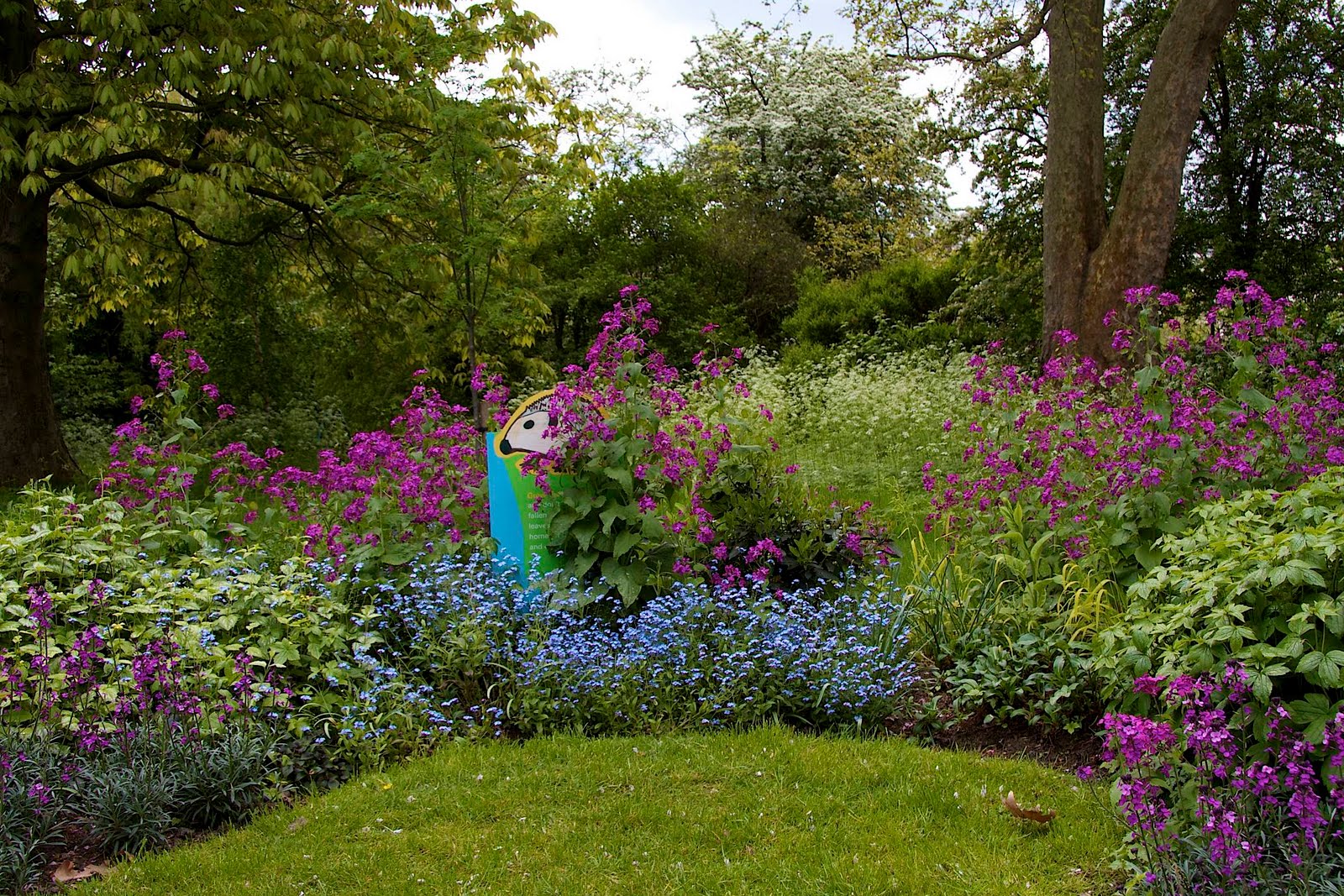
The main aim of the Regent’s Park Wildlife Garden is to provide a safe and friendly environment for people to visit and wildlife to flourish.
Our non-intrusive gardening policy avoids the use of chemicals wherever possible, to use native plants that need little water to avoid draining precious resources and enrichment that includes a pond and bog to further the biodiversity of the garden.
Much of it is left to grow wild to provide cover for birds, to encourage butterflies and hopefully a safe haven for hedgehogs.
While we have seen plenty of birds,bats,dragonflies, butterflies, insects and moths, hedgehogs have never been seen in our garden even though Regent’s Park is the only park in London that has them. As nocturnal creatures, the chances of ever seeing them were remote!
That all changed yesterday. While doing some routine work, we discovered a baby hedgehog had fallen into a well. He was covered in mud and had no way of escaping. Fortunately, using a very thick pair of gloves, we were able to pull him out into safety.
Although covered in thick mud, it was clear that with some quick action, his chances of survival were good, so two volunteers rushed him off to a vet who deals with wild animals in distress.
After being cleaned up and given a tasty meal consisting of wet cat food, he was given the all clear this morning to return.
Once again, two volunteers went to Wood Green, collected the hedgehog and brought him back to the Park.
We’re pleased to report that Hercules was released back into a secluded area of the park and after a few seconds of getting his bearings, he dashed under cover for some well earned rest.
All the

volunteers learnt a lot in 24 hours about hedgehogs!
The latin name is Erinaceus and our own British hedgehog is scientifically known as Erinaceus europaeus; it is the same species that occurs throughout most of the continent of Europe. In Britain it is found almost everywhere except some of the Scottish Islands, but tends to be scarce or absent from wet areas and pine forests. Uplands and mountainsides are not popular, probably because they lack both suitable food and suitable nesting places. Hedgehogs are well established in our urban habitat and can, somewhat surprisingly, survive very well in our cities, making extremely good use of cemeteries, railway land, wasteland and both public and private gardens.
They are a protected species and it is an offence to deliberately harm them. They are also in decline and need all the help and support they can get. If you are interested in doing your bit, whether in with hedgehog friendly gardening, or supporting the charities that work hard to look after them we found these organisations helpful:
http://www.britishhedgehogs.org.uk/ proved to be a valuable resource as well as
http://www.sttiggywinkles.org.uk/ We’d also like to thank J F Staton and his assistant for caring for Hercules for absolutely no charge. If you live in North London and need any veterinary help, then give them a call on 020 8888 4523